A Guide to Turkish Meze
Meze are not starters. In a meyhane they are the meal — a slowly expanding landscape of small plates that stays on the table all evening. Here is what you are looking at, and how to order it.
How ordering works
In many traditional meyhanes a waiter arrives carrying a large tray of cold meze and holds it beside your table. You point at what you want. There is no menu reading, no negotiation, and no obligation to take a lot.
Order fewer plates than feels right at the start. Meze accumulate through the evening, and it is normal to add more as you go. Everything on the table is shared.
Cold meze — where every table begins
- Haydari — thick strained yoghurt with garlic and herbs. Dense, cooling, and the safest first plate for anyone unsure.
- Fava — a smooth purée of broad beans, served set and cut into slices, with olive oil and dill.
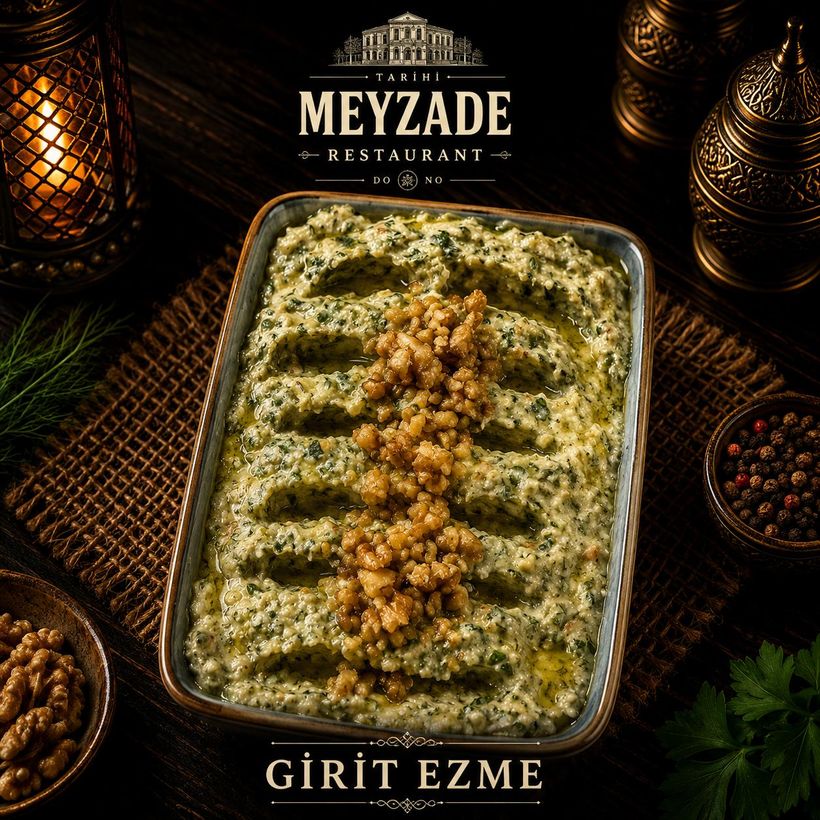
- Girit ezme — a Cretan-style meze of soft cheese, herbs, walnuts and olive oil.
- Acılı ezme — a sharp, spicy tomato, pepper and onion relish. The heat on the table.
- Humus — familiar to most visitors, though in Istanbul it is often served warm with pine nuts.
- Atom — yoghurt with hot pepper oil, for those who want more fire.
- Lakerda — salt-cured bonito, a rakı table classic.
- Beyaz peynir and melon — white cheese and melon, the ceremonial pairing with rakı.
Most cold meze are naturally vegetarian, and many are vegan if you skip the yoghurt-based ones.
Zeytinyağlı — the olive-oil dishes
A distinct category: vegetables slowly cooked in olive oil and served at room temperature. They are lighter than they look and they sit particularly well against rakı.
- Enginar — artichoke hearts in olive oil with carrot and peas.
- Yaprak sarma — vine leaves rolled around rice, pine nuts and currants.
- Barbunya pilaki — borlotti beans stewed with tomato and olive oil.
- Semizotu — purslane, usually with yoghurt and garlic.
- Kabak boranı — courgette with yoghurt.
- Çalı fasulye — green beans in olive oil.
Hot starters — the second wave
These arrive while the cold plates are still on the table, not after them.
- Tereyağlı yaprak ciğeri — lamb liver in butter. In Istanbul this is a signature dish, and a good meyhane is often judged by it.
- Arnavut ciğeri — "Albanian liver", diced, floured and fried, served with raw onion and sumac.
- Tereyağında karides — prawns in butter, sometimes finished with cheese.
- Sigara böreği — thin pastry cigars filled with white cheese and parsley.
- Paçanga böreği — the same idea, but with pastırma (cured beef) inside.
- Midye tava — fried mussels with a garlic and walnut sauce.
If you are vegetarian
A meyhane is one of the easiest places in Istanbul to eat well without meat. The entire cold meze and olive-oil sections are largely vegetable-based, and a table of eight or ten meze makes a full, varied meal on its own. Say etsiz (without meat) and you will be understood.
How much to order
A reasonable starting point is two to three cold meze per person, one or two hot starters for the table, and then a decision about grills or fish once you see how far the meze got you. Most tables never make it to a main course — and that is not a failure of planning.
Frequently asked questions
What is the difference between meze and tapas?
Both are small shared plates, but meze stay on the table for the whole meal rather than arriving in sequence, and a meyhane meal is often built entirely from meze with no main course at all.
Are Turkish meze vegetarian?
Many are. The cold meze and olive-oil dish sections are largely vegetable-, yoghurt- and pulse-based, so a full vegetarian meal is easy to assemble.
How many meze should I order per person?
Two to three cold meze per person plus one or two hot starters for the table is a good start. You can always add more as the evening goes on.
Do I have to order a main course?
No. In a meyhane the meze are the meal. A grill or fish afterwards is optional and many tables skip it.