What Is a Meyhane?
If you ask for a bar in Istanbul you will get a bar. If you ask for a restaurant you will get a restaurant. A meyhane is neither — and it is the reason many visitors remember their evening in Istanbul long after the trip is over.
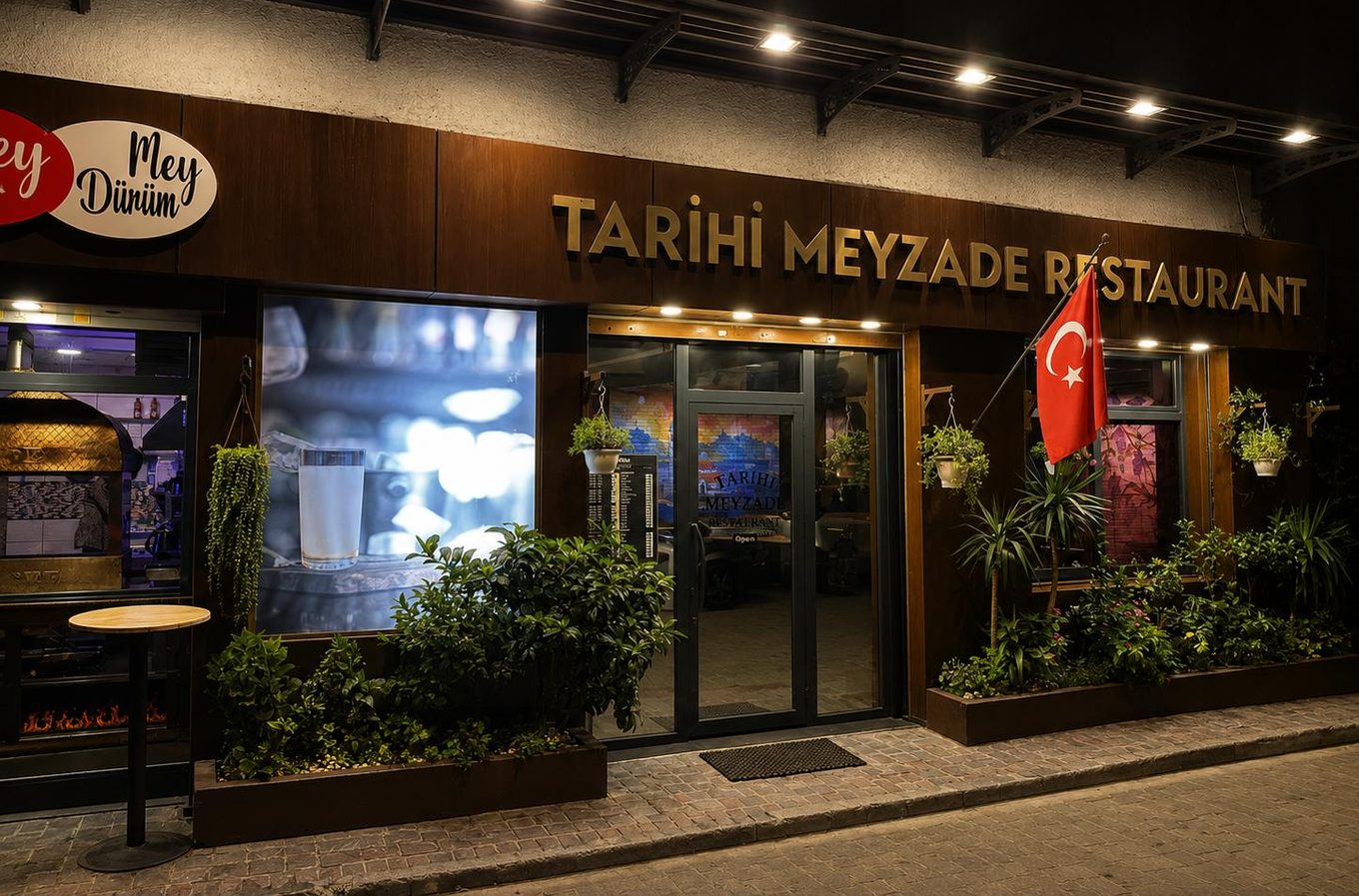
The word itself
The name comes from Persian: mey means wine and hane means house. A meyhane is, literally, a wine house. In Ottoman Istanbul these houses were mostly run by the city's Greek, Armenian and Jewish communities, and they became the places where the city ate, argued, sang and made peace with itself.
What survived into modern Turkey is not the wine but the ritual: a long table, many small dishes, a slow-burning bottle of rakı, and an evening that is measured in hours rather than courses.
A meyhane is not a restaurant
In a restaurant you order a main course and the evening is built around it. In a meyhane the opposite is true. The meze — dozens of small cold and hot plates — are the meal. A grill or a fish may arrive later, but it is the closing act, not the point.
Nobody is in a hurry. The waiter is not trying to turn the table. It is completely normal to sit for three or four hours over a handful of meze and one bottle. This is the single biggest difference visitors notice, and the one that takes the longest to get used to.
How the evening actually works
- Cold meze first. In many meyhanes a tray is brought to the table so you can point at what you want. Take fewer than you think you need — you can always order more.
- Rakı is poured. Usually a shared bottle, glasses topped with water, ice on the side. (We wrote a separate guide on how to drink rakı.)
- Hot starters follow — fried, grilled or buttered dishes that arrive while you are still working through the cold plates.
- Then, if anyone is still hungry, the grill or the fish of the day.
- Fruit closes the table. Melon in summer, whatever is in season otherwise. Dessert is optional and often skipped.
Table etiquette, briefly
- Glasses are filled for others, not for yourself. If your neighbour's glass is empty, fill it.
- Şerefe (share-eh-FEH) means "to honour" — it is the toast. Glasses are usually touched low, near the base.
- Nobody drinks rakı without food. It is not a shot; it is a companion to the meze.
- Sharing is assumed. Every plate on the table belongs to everyone.
- There is no rush and no expectation that you order a main course.
Where meyhane culture still lives in Istanbul
Beyoğlu remains the heart of it — Nevizade and Asmalımescit are the best-known streets, though they are also the most crowded and the most tourist-facing. Kumkapı by the sea and Kadıköy on the Asian side each have their own version.
Slightly off that map is Kasımpaşa, a short ride down the hill from Taksim toward the Golden Horn. It is an old neighbourhood with an ordinary, lived-in character, and the meyhanes here are mostly filled with people from the area rather than visitors. That is where you find the version of the tradition that has not been adjusted for an audience.
Frequently asked questions
Is a meyhane the same as a bar?
No. A bar is built around drinks; a meyhane is built around food and conversation, with rakı or wine alongside. You would not go to a meyhane simply to drink.
Do I have to drink alcohol at a meyhane?
Not at all. The meze are the heart of the meal and many are vegetarian. Şalgam (fermented turnip juice), ayran, soft drinks and juices are always available.
How long does a meyhane dinner take?
Plan for three hours or more. The pace is deliberately slow — that is the point of the format, not a service problem.
Is a meyhane suitable for families?
Yes. Meyhanes in Istanbul are ordinary neighbourhood restaurants where families, groups of friends and business tables all eat side by side.